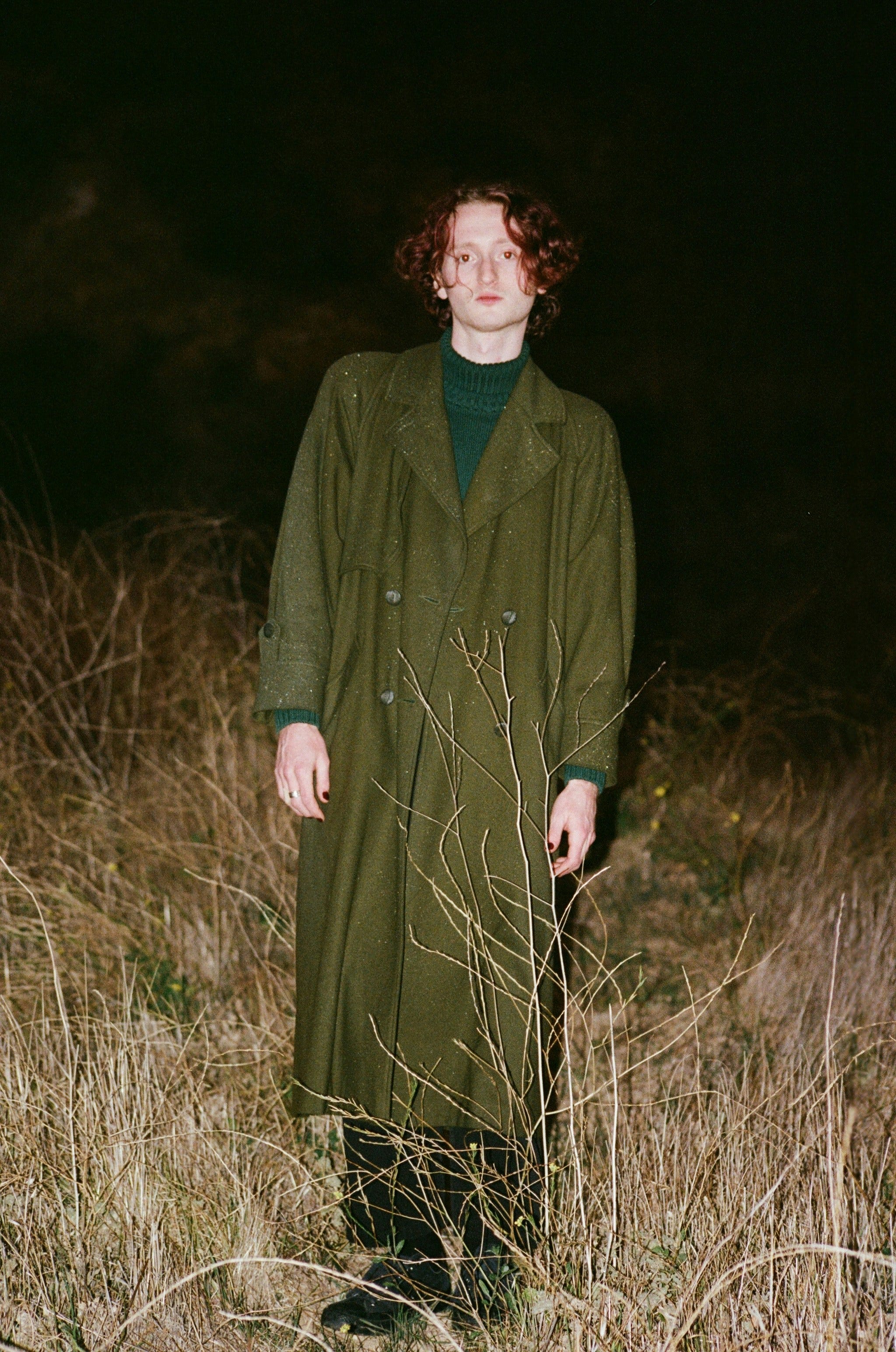
Timeless: The 1914 Archive
The trench coat’s journey from the theatre of war to the pinnacle of global luxury: a century of functional perfection.

To understand the trench coat, one must first understand the brutal necessity that birthed it. In 1914, as Europe was plunged into the First World War, the traditional heavy wool greatcoats used by officers proved to be a liability—they were cumbersome, water-absorbent, and weighed down by the mud of the trenches. The solution came from a textile revolution: Gabardine. Patented in the late 19th century, this tightly woven, water-repellent fabric allowed for a garment that was light enough for movement yet resilient enough for the harshest conditions.
What we now consider “fashion details” were, in 1914, life-saving features. The double-breasted front was designed to provide an extra layer of protection against the wind; the storm flap (the extra patch of fabric on the right shoulder) served to deflect the recoil of a rifle and prevent rain from seeping into the gun’s mechanism. The epaulettes on the shoulders, now a hallmark of military chic, were functional anchors for binoculars, gas masks, and rank insignia. Even the metal D-rings on the belt were engineered for utility, allowing officers to carry maps and equipment with ease. This was the first true instance of “tech-wear” in history—a design that prioritized survival without sacrificing a sharp, disciplined silhouette.
The genius of the 1914 trench coat lies in its post-war survival. When soldiers returned home, they didn’t discard their coats; they wore them in the streets, inadvertently starting a civilian revolution. By the 1930s and 40s, Hollywood had adopted the trench as the official uniform of the “mysterious outsider.” It became the armor of Humphrey Bogart in Casablanca, draped in shadows and rain, and later the chic, oversized shield for Audrey Hepburn in the final scenes of Breakfast at Tiffany’s.
This transition from military gear to cinematic symbol transformed the trench into a garment of psychological power. To wear a trench was to signal authority, intelligence, and a touch of melancholy. Designers like Thomas Burberry and Aquascutum understood that they weren’t just selling a coat; they were selling a heritage of resilience. Over the decades, the trench has been deconstructed by Galliano, oversized by Demna, and polished to a mirror shine by the houses of Paris, yet the 1914 DNA remains untouched. It is one of the few garments in the world that can be worn by a twenty-year-old on a subway or a CEO in a boardroom, and look equally at home.
Why 1914 Still Matters in 2026?
In a world increasingly dominated by the ephemeral nature of digital trends, the 1914 trench coat stands as a monument to permanence. As an editor, I often look at modern collections and ask: “Will this be relevant in a hundred years?” Most fashion fails that test. The trench coat, however, has already passed it. Its survival is a testament to the fact that when form follows function with absolute precision, the result is beauty.
For Runway, the “Timeless” series is about more than nostalgia. It’s about recognizing that the best designs are those that solve a problem. The 1914 trench coat solved the problem of the elements, and in doing so, it created a blueprint for every piece of outerwear that followed. It reminds us that quality is the ultimate luxury. Whether rendered in the original honey-colored gabardine or in the high-tech, recycled textiles of the modern era, the trench remains the most versatile weapon in a stylist’s arsenal. It is, and always will be, the definitive masterpiece of the human wardrobe.